Commercial Real Estate
Market Studies for
Hawaiʻi & the Pacific
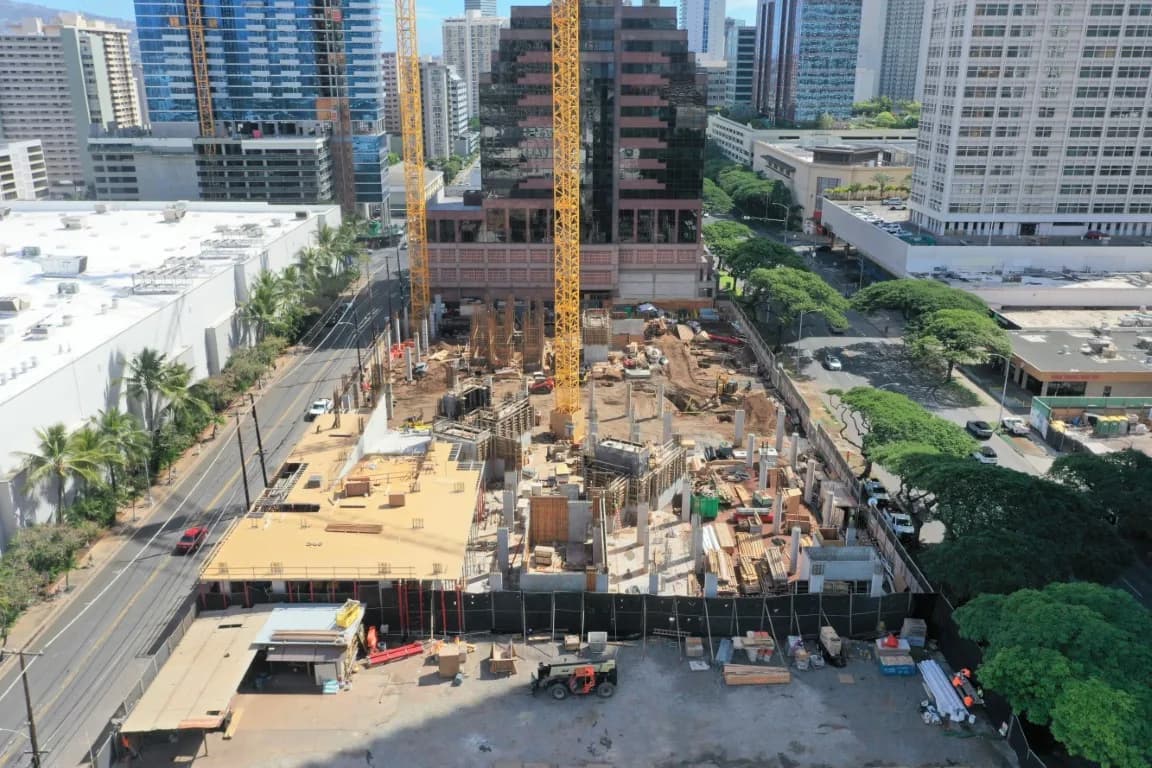
Before a project is designed, financed or priced, someone has to answer the market question: who will rent or buy this, at what price, and how fast? The Benavente Group prepares commercial real estate market studies and market rent studies for developers, lenders, institutions and government agencies across Hawaiʻi and the Pacific.
Request a Proposal
Tell us about your assignment
Studies Grounded in
Transaction Data
Our studies are prepared by the same team of appraisers and market analysts that values Hawaiʻi commercial property. That gives them a direct line to transaction data, lease terms and on-the-ground knowledge that desk-based research cannot reach.

Evidence for Decisions
Made Early
| Client | How we help |
|---|---|
| 01Developers | How we helpDemand evidence before land acquisition or design. |
| 02Lenders | How we helpIndependent market support for a loan committee. |
| 03Institutional investors | How we helpSubmarket depth before entering a new island market. |
| 04Government agencies | How we helpDemand for housing, commercial and public-private projects. |
Examples of questions a market study answers
- Is there room in a submarket for another warehouse development?
- What rent will a new medical office building achieve?
- How long will a new rental project take to lease up?
- Can a resort area support another hotel?
- What will retail tenants pay at a new mixed-use project?
Each question needs a different trade area, data set and method.
The Questions a
Market Study Answers
| Study component | The question it answers |
|---|---|
| Demand analysis | The question it answersWho are the buyers or tenants, and how many are there? |
| Supply pipeline | The question it answersWhat is built, approved and proposed in the trade area? |
| Absorption | The question it answersHow quickly will new space lease up or sell? |
| Vacancy and market rent | The question it answersWhat will tenants pay, and how much space sits empty? |
| Market saturation | The question it answersCan the market support one more project of this type? |
| Rent comparability | The question it answersHow do the subject's rents compare with the market? |
| Capture rate | The question it answersWhat share of demand can this project realistically win? |
Market Rent
Studies
What would a willing tenant pay for this space, today, on typical terms?
A market rent study answers one focused question: what would a willing tenant pay for this space, today, on typical terms? Owners use it to set asking rents and prepare for lease renewals. Lenders use it to test a borrower's projections. Ground lessors and lessees use it ahead of a rent reopening.
In Hawaiʻi, where lease terms vary widely and published rent data is thin, a study built on verified lease evidence is often the only defensible answer. Our rent comparability guide explains a related type of study.
Market Studies for Every
Commercial Sector
| Sector | What we analyze |
|---|---|
| Office | What we analyzeInventory and vacancy by submarket, tenant demand by industry, sublease space, rent and concession trends |
| Retail | What we analyzeTrade area population and spending, visitor spending, existing centers, anchor tenant demand |
| Industrial | What we analyzeWarehouse and distribution demand, port and airport proximity, land availability, rent and vacancy trends |
| Hospitality | What we analyzeVisitor arrivals, occupancy, average daily rate and RevPAR, new supply, competitive set |
| Multifamily | What we analyzeHousehold growth, income levels, rent levels, pipeline of new units, absorption of recent projects |
Studies can cover a single submarket or several islands.
How We Measure
a Market
Every study rests on two sides of the same equation.
Demand
We identify who will occupy, rent or buy the space, and how many of them there are. For an apartment project, that means household formation, income and renter share. For retail, it means trade area population, visitor counts and spending. For office and industrial, it means employment by sector and the space each worker or business needs.
Supply
We inventory the existing competitive space, then track everything in the pipeline: projects under construction, approved, and proposed. In island markets, the pipeline is often small but concentrated. One large project can absorb years of demand.
Comparing the two shows whether the market is undersupplied, balanced or saturated. It also shows how quickly a new project can be absorbed, and what rent or price it can command. Our guides to supply and demand analysis and vacancy rate explain these measures in more depth.
Small Markets,
Big Consequences
In island economies, a single new project can shift a submarket. Demand is driven by tourism, military spending and a small resident base, while land and entitlements limit supply. National data sets rarely capture these dynamics at the island or district level.
Our market analysts build studies from local sources: county permits and records, interviews with brokers and owners, lease data, and on-the-ground observation. In Guam, Saipan and the Marshall Islands, that local knowledge is often the most reliable data there is.
Island-by-island differences
Each island is effectively its own market.

Oʻahu
Oʻahu has the depth and data of a mid-sized metro, with distinct submarkets from downtown Honolulu to Kapolei.

Maui
Maui's economy is closely tied to visitor spending and has been reshaped by recovery after the 2023 wildfires.

Hawaiʻi Island
Hawaiʻi Island splits between Hilo and Kona, with very different demand drivers.

Kauaʻi
Kauaʻi is small, supply-constrained and highly sensitive to new projects.

Guam
Guam's market is shaped by military investment and visitor arrivals.
A study that treats the state as a single market misses all of this.
What a Market
Study Includes
- An executive summary of conclusions on demand, supply, rent or price, and absorption
- A definition of the trade area and the reasoning behind it
- Economic and demographic drivers for the trade area
- An inventory of competitive supply, with occupancy and rents
- The development pipeline, including projects under construction, approved and proposed
- Demand estimates and capture rate analysis
- Absorption projections and recommended rent or price positioning
- Assumptions, limitations and data sources
How a Study Leads to What Comes Next
A market study often comes at the start of a project's life. The same evidence later supports the highest and best use analysis, the construction loan appraisal and, eventually, the stabilized valuation. Working with one firm across those stages keeps the assumptions consistent.
From Question
to Conclusion
- 01
Define the question
Property type, trade area, time horizon and the decision the study must inform. - 02
Gather evidence
Supply inventory, pipeline, rents, sales and demand drivers. - 03
Analyze
Demand, supply and absorption modeled under clearly stated assumptions. - 04
Report
A written study with conclusions a lender, board or agency can rely on.
Market
Updates
Clients tracking a market over time, such as lenders monitoring collateral or owners with properties on several islands, can discuss periodic updates covering rents, vacancy, new supply and sales. Our cap rate trends and outlook article shows the kind of market commentary we provide.
What Our Clients Say
Thank you for submitting the draft appraisal report. It is truly one of the best written drafts I have reviewed with data support and rationale behind the assumptions.
Frequently Asked
Questions
- An appraisal concludes a value for a specific property. A market study analyzes demand and supply for a property type in a market, often before the property exists.
- It depends on scope and geography. We set the delivery date at engagement.
- Yes. Lenders often require independent market support for construction and acquisition loans.
- Yes. We prepare studies in Guam, Saipan, the Marshall Islands and other Pacific islands.
- A study that concludes the rent a willing tenant would pay for a specific space on typical terms, supported by comparable lease evidence.
- Absorption is the rate at which space is leased or sold in a market. It drives how long a new project takes to stabilize, which affects financing and returns. Our absorption rate guide explains it.
- Yes. A market saturation analysis compares demand with existing and planned supply to show whether another project can be supported.
- Yes. All inquiries and engagements are treated with strict confidentiality, and studies are prepared only for the client and intended users named in the engagement.


Discuss a
Study With Us
Tell us about the property type, the trade area and the decision the study must inform. We will respond promptly with scope, timing and next steps.
Prefer to talk? Call (808) 784-4320